Slop Influence on Thinking
What is slop?
What image in your mind does slop create? After this AI boom of media and software content, slop has created an image of being “something unworthy of attention” in my mind.
Before AI, I never really used the word “slop”.
Never really thought about it. So, no before image.
When did this word start to gain prominence? It should definitely intersect with the rise of usage of AI in creating stuff.
Let’s see the Google trend of the word over the years.
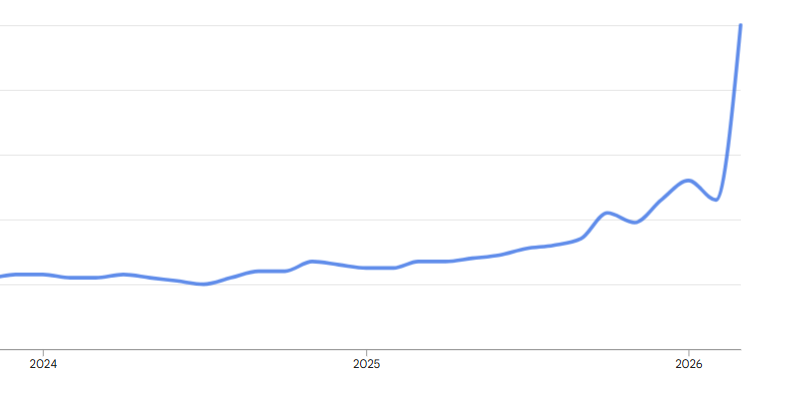
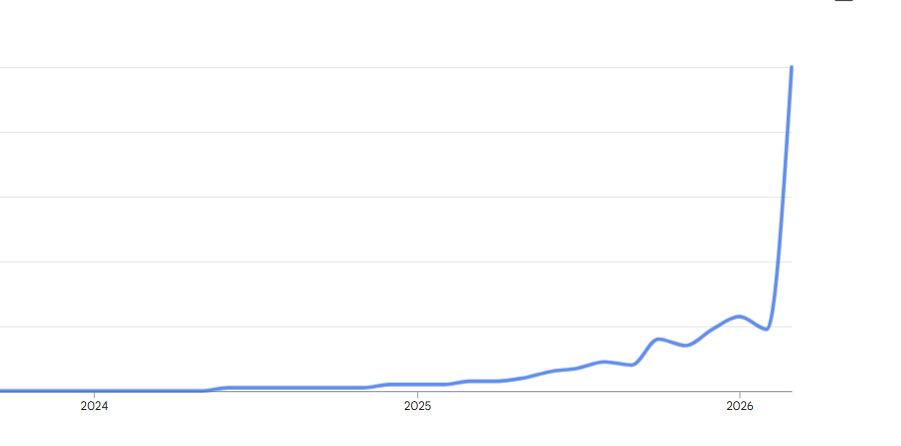
Almost the same graph, except “AI slop” together was never really searched before 2025.
Both the rise of “slop” and “AI slop” have the same pattern, which means ~90% of the search term was just “AI slop”, not “slop”.
What happened at this time?
Well, I have not researched it, but if I had to guess, Claude got significantly better at delivering end projects with the least amount of errors.
I remember using Claude around February to May 2025, maybe. It was good, of course—good enough that I paid $20 to use it.
The problem was still apparent, though: it made mistakes, missed simple things, and was simply unreliable as a junior engineer because you would spend more time fixing stuff.
I stopped using Claude at that time, then purchased it again in December.
And upgraded to $100 in January.
It is worth it because the difference in value is much higher (please do not hike the price, Claude).
With any vague prompt I write, it correctly understands what I mean. It’s like talking to an engineer. Not a junior, but instead someone who is pretty well-versed in fundamentals.
Simple mistakes almost vanished.
It seemed like magic. I didn’t even see one line of code when it did it.
After one project, I really didn’t give a thought about language choice altogether.
It has changed or just went to another level during the few months before September–October. Maybe around June to August, Claude got significantly better.
Someone with no technical skill can easily create an app without knowing what a “data structure” is.
So, in consequence, the “slop” has greatly amplified at the highest level.
Because every decision or possibility taken by agents tends towards the most likely one.
Its randomness certainly helps in diversifying it, but it will still converge into a few big ideas that we can easily categorize.
Many people now can create apps with just words. Most will let the agent drive the idea instead of driving it themselves. Saying yes to most things. It’s a human tendency to not make decisions. AI, instead, makes their decisions.
So the slop is basically whatever the AI’s view of the most likely outcome to X falls into.
X is basically whatever the human intent and idea are, as represented by the real, unbiased prompt.
Let’s say someone writes, “please give me a detailed prompt to improve this photo with best industry practices.” The AI’s result for this “enhanced prompt”—its real intent and idea of “industry practices”, whatever industry practices means for the prompt enhancer—will be fully the AI’s decision now.
This results in a few big ideas that the AI will finally give its output to.
The thinking required to create it is eliminated.
When the conscious thought to create it is eliminated, the choices of the builder are guided by an AI.
The thinking and creative part—a figment of imagination that comes from an infinite well.
The lack of this element results in the creation of slop.
But conversely, the power of AI is its ability to make decisions at events which require knowledge. So we arrive at quite a tough decision to make:
At what point do we hand off the decision to AI, and what decisions do we keep?
That is tough.
I don’t know the answer to that.
What I do know is that the things I make have the influence of slop. This is because at some points, regarding exactly what things to have or not in the product, I let Claude think of it. I don’t think about it at all sometimes.
Sometimes I do. It’s hard to consciously think and decide what AI comes up with. I need rest. But if I take rest, the AI’s power is not really unleashed.
So I let it think for me.
Which for sure introduces the element of “slop”.
Some level of it is probably fine since, using AI, it’s impossible to bring it to zero now.
But certain decisions which will totally change the direction of a project—that cannot be slop, or the whole thing will just be slop.
I notice things about how we think. And I write about it. Subscribe to not miss the next one.
Comments
built using sutrena